
5 Tips for an Organized Kitchen That Actually Works for Busy Moms
Quick Answer: An organized kitchen starts with activity zones (prep, cooking, snacking, kid-access), clear containers for visibility, a “one in, one out” rule to prevent clutter, labels so everyone knows where things belong, and a donation shelf to exit items without guilt. Most tired moms find that one system change—like switching to clear containers—creates a domino effect of calm that ripples through the whole kitchen.
Why Kitchen Organization Matters to Busy Moms
A disorganized kitchen doesn’t just waste 10 minutes of your day searching for scissors. It makes cooking feel impossible when you’re standing at the stove with three kids yelling, steals your mental energy during meal prep, and plants a seed of resentment toward a room you spend hours in every single week.
When your kitchen has no system, every meal is a treasure hunt. You’re opening three drawers for utensils. You can’t remember which cabinet holds the baking sheets. The snacks are scattered across three shelves, so your kids ask you where everything is instead of helping themselves. Meanwhile, your partner is frustrated because they can’t find the thing they need, and you’re frustrated because you’ve just re-explained the kitchen layout for the tenth time.
Here’s what changes when you organize your kitchen: Cooking becomes faster. Your kids become more independent (they can actually find their own snacks). Your partner stops asking where things are. And you get back the mental space that was being stolen by kitchen chaos.
This isn’t about Pinterest-perfect shelving or spending hundreds of dollars on organizers. It’s about building a system that works for your actual life—one that even tired, busy moms can maintain.
Tip 1: Create Zones by Activity (Not by Item Type)
The biggest organizing mistake most people make is grouping items by category. All utensils together. All baking supplies in one spot. All pans stacked in one cabinet. It feels logical, but it’s exhausting to live with.
Instead, organize your kitchen by the activity that happens there. Think about how you actually use your kitchen, and build zones around that flow.
Cooking Zone / Prep Zone
This is where the magic happens—where you spend most of your time when you’re cooking dinner. Your prep zone should have everything you need within arm’s reach: cutting board, sharp knives, cutting board storage, wooden spoons for stirring, measuring spoons, and a small trash bowl for vegetable scraps. If you have space, keep your most-used pots and pans here too, not in a cabinet across the kitchen.
When your prep zone is organized this way, you’re not running around your kitchen looking for a knife or a wooden spoon. You’re cooking efficiently, and your kids aren’t watching chaos unfold.
Snack Zone (Lower, Kid-Accessible)
Create a zone that your kids can actually reach. This is not about limiting your kids—it’s about independence. When your kids can see and reach their own snacks, they stop asking you for snacks every five minutes, and they start helping themselves.
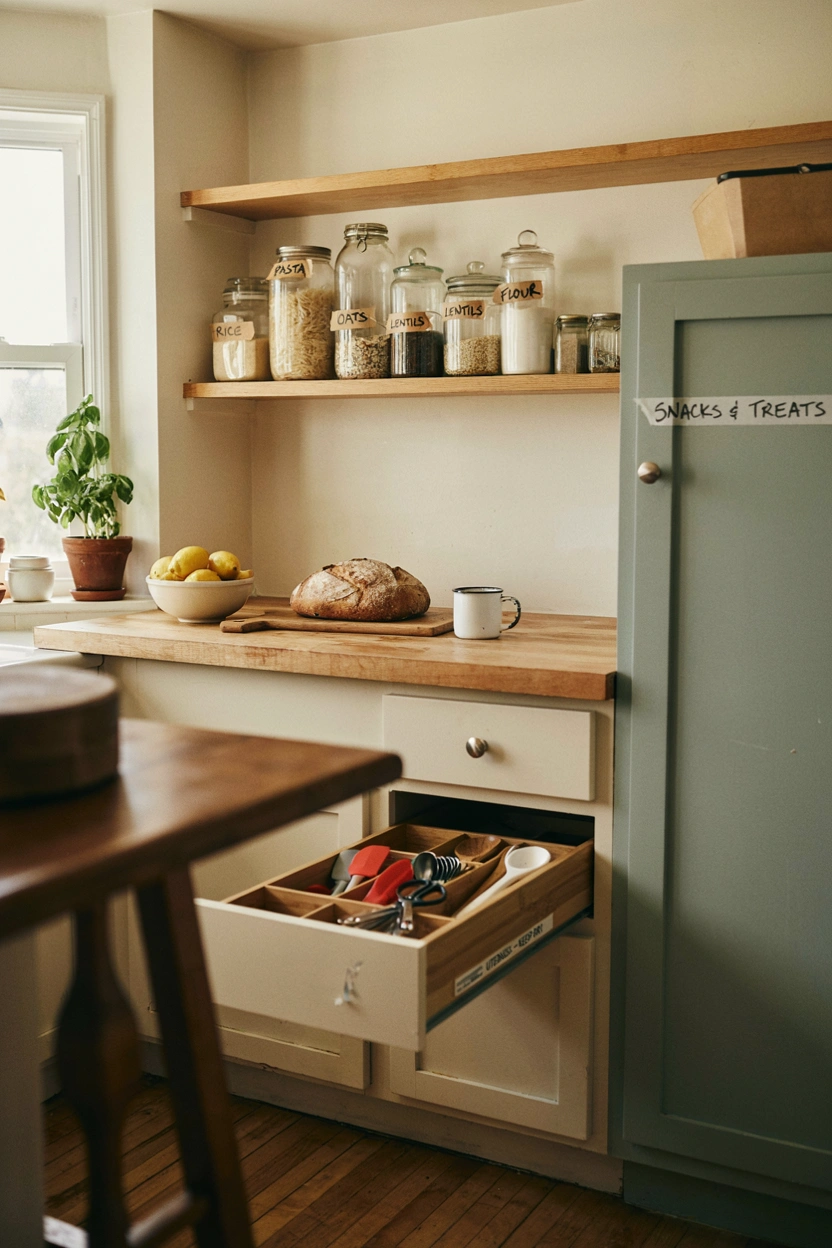
Keep crackers, granola bars, fruit pouches, and other grab-able snacks in clear containers on a lower shelf or in a lower drawer. Label each container with what’s inside. Use picture labels for younger kids who can’t read yet. This one zone will change your afternoon sanity.
Utensil Zone
Don’t scatter your utensils across three drawers. Keep your everyday utensils (spatulas, slotted spoons, ladles, tongs) in one drawer with dividers. Group by size or by function—whichever makes sense to you. Everything else (cake testers, specialty utensils, pasta forks) can live in a drawer farther away. You’ll use your everyday utensils every single day; make them easy to find.
[SNIPPET: Steps format — To organize your kitchen by zones: 1. Identify your main cooking and prep area, and keep prep tools within arm’s reach. 2. Create a snack zone on a lower shelf so kids can access independently. 3. Group utensils by frequency of use, keeping everyday items in one drawer with dividers.]
Tip 2: Use Clear Containers (With One Exception)
If you implement only one change from this list, make it clear containers. This is where the domino effect starts.
Visibility changes everything. When you can see your pasta, your crackers, your cereal, your nuts—you actually use them. You know when you’re running low. You don’t buy the same thing twice because you forgot you had it. And your kids can see their snack options without asking you.
The psychology is real: visible food increases consumption and decreases waste. It also decreases the mental load of meal planning because you can actually see what you have to work with.
Why Clear Matters: The Psychology of Visible Food
Studies on pantry organization show that when food is visible, families use more of what they have and throw away less. It sounds simple, but the impact is huge. You’ll spend less on groceries because you know exactly what’s in your kitchen. You’ll cook faster because you can see ingredients at a glance instead of opening fifteen containers to find what you need.
The Exception: Dry Goods That Need Airtight Seals
Clear containers are perfect for crackers, cereals, pasta, flour, sugar, and baking supplies—but here’s the catch: they need to actually seal. A container that doesn’t seal properly is just a dust collector. Invest in clear containers with airtight lids that actually close. This prevents staleness and keeps pantry pests out.
Budget Baseline vs. Upgraded Version
| Budget Baseline ($0–$20) | Upgraded Version ($50–$100) |
|---|---|
| Use mason jars or recycled clear containers you already have. Buy a cheap label maker at the dollar store ($1). Start with three to five containers and add more as you need them. | Buy a full set of matching clear containers (Rubbermaid Brilliance, OXO, or Sistema brands) so everything looks cohesive. Invest in a quality label maker. Add matching shelf liners and organizers. |
| What it looks like: Mismatched containers, some with handwritten labels, some without. It works, and it’s functional. | What it looks like: Instagram-worthy pantry with matching containers, consistent labels, and a clean, coordinated aesthetic. It’s beautiful AND functional. |
| Reality: Your kitchen is organized. Your family can find what they need. That’s what matters. | Reality: Your kitchen is organized, beautiful, and your system is easier to maintain because it’s visually cohesive. |
[SNIPPET: Quick answer format — Clear containers work for kitchen organization because they make food visible, which decreases waste, speeds up meal prep, and helps kids see their snack options without asking.]
Tip 3: Implement the “One In, One Out” Rule
Organization fails when nothing leaves. You organize your kitchen, feel great for two weeks, and then chaos creeps back in because you never remove items—you just keep adding more.
The “one in, one out” rule is simple: Every time something new enters your kitchen, something old leaves. Buy a new kitchen gadget? Get rid of one you don’t use. A new container? Remove an empty one. This prevents the slow creep of clutter that kills every organizing system.
This isn’t about deprivation. It’s about being intentional with the space you have and not letting your kitchen become a graveyard of things you might use someday.
How to Make This Work With Kids
Kids create clutter naturally—toys, artwork, school papers, snack containers. Extend the “one in, one out” rule to items they bring into the kitchen. When they bring home a new craft project, ask them which old drawing they want to let go of. When you buy a new snack they like, remove the old snack container from the zone. Make it a game, not a punishment.
When to Do Your Seasonal Reset
Once a year—spring or New Year, pick whichever works for you—do a full kitchen reset. Go through every drawer, every shelf, every cabinet. Throw out expired foods. Remove broken appliances. Get rid of the container lids that don’t have matching bottoms. Remove kitchen gadgets you haven’t touched in a year. This is your reset button that keeps the system from getting weighed down by accumulation.
[SNIPPET: Steps format — To implement the “one in, one out” rule: 1. Every time something new enters your kitchen, decide what leaves. 2. Be intentional about keeping only items you actually use. 3. Do a full seasonal reset once a year to prevent slow accumulation of clutter.]
Tip 4: Label Everything (Yes, Everything)
Organization systems fail when no one knows the rules. A beautiful, organized kitchen doesn’t stay organized if your partner and kids don’t know where things belong. Labels are the enforcement mechanism that keeps your system alive.
This doesn’t mean spending $50 on a fancy label maker and making everything perfect. It means making sure that when someone opens a drawer or looks at a shelf, they immediately know what goes there and where to put it back.
Label Maker Baseline vs. Hand-Written Option
Dollar store label stickers and a pen work just fine. Write the contents directly on your containers or drawers. Hand-written labels are honest and real and get the job done. A label maker creates uniform, professional-looking labels that are easier to read and take less time to make. Both work. Pick what fits your budget and your patience level.
Kid Involvement: Picture Labels for Younger Kids
If you have kids who can’t read yet, use picture labels. Cut out a picture of a snack and tape it to the container, or draw a simple icon. This gives younger kids independence and tells them exactly what goes where. Your three-year-old can now put crackers back in the cracker container because they can see the cracker picture, not because they can read the word “crackers.”
[SNIPPET: Quick answer format — Labels keep your organizing system alive by making it clear to everyone what belongs in each zone and where things go back. They remove decision-making and prevent slow chaos.]
Tip 5: Create a “Donation Shelf” (Your Secret Weapon)
Every mom has items she’s been “maybe” getting rid of for months. A kitchen gadget that seemed useful but never works. A food container that’s actually broken but you’re not sure. A serving bowl that doesn’t match anything. These items sit in your kitchen, taking up space and creating visual clutter, because you haven’t decided what to do with them.
The donation shelf solves this. It’s a dedicated spot (one shelf in a cabinet, or one corner of a drawer, or even a box under the sink) where items go when you’re ready to let them go. No guilt. No second-guessing. They’re leaving. This shelf is your staging area before items go to donation, recycling, or the trash.
The donation shelf removes decision paralysis. You don’t have to decide right now whether you actually want that item or not. You just move it to the donation shelf, and in a week or two, you donate it without thinking about it again. This prevents the “I’ll organize later” mentality that kills systems.
How to Use the Donation Shelf Without Overwhelm
Set a rule: anything on the donation shelf leaves the house within two weeks. Not months later. Not after you’ve thought about it. Two weeks, and it’s gone. If you change your mind and want it back, grab it before it leaves. Otherwise, it goes. This urgency keeps the shelf from becoming a black hole of indecision.
[SNIPPET: Definition format — A “donation shelf” is a designated zone in your kitchen where items you’re ready to part with go before leaving your house. It removes guilt and decision paralysis from the organizing process.]
Common Mistakes That Sabotage Organization
Organization systems fail for predictable reasons. Knowing these mistakes helps you avoid them:
- Organizing by category instead of activity: All utensils in one place sounds logical, but it’s exhausting to use. Your cooking utensils should live near your stove, not in a drawer across the room.
- Buying organizers before defining your system: You’ll end up with containers that don’t fit your space or your items. Start with what you have. Add tools later.
- Expecting the system to maintain itself: Organization is not a one-time project. It’s a system that requires small, regular habits. Without the habits, chaos returns.
- Organizing without involving your family: If your kids and partner didn’t help design the system, they won’t maintain it. Involve everyone in the organizing process so they feel ownership.
- Keeping “just in case” items: The broken container. The gadget you might use someday. The expired spice. These items accumulate slowly and kill your system. Be ruthless about removing them.
Keeping Your System Alive (The Real Talk)
The hardest part of kitchen organization isn’t the initial organizing. It’s keeping the system alive when life gets chaotic.
Perfect maintenance doesn’t exist. Some weeks you’ll be too busy to label anything new. Sometimes your kids will create chaos faster than you can organize. That’s normal. What matters is having small rituals that keep the system from completely falling apart.
The 10-Minute Kitchen Tidy
Spend 10 minutes every evening putting things back in their zones. Put the snacks that migrated back in the snack zone. Return serving utensils to the utensil zone. Wipe down your prep area. This single ritual prevents the slow creep of chaos that kills systems. You’re not deep-cleaning. You’re not organizing. You’re just resetting the zones to how they should be.
Monthly Check-In Habit
Once a month, spend 30 minutes on a kitchen check-in. Look at each zone. Are labels still clear, or do they need refreshing? Are there items that consistently migrate where they don’t belong? Do you need to adjust the zones based on how you’re actually using the space? Small tweaks prevent big messes.
[SNIPPET: Checklist/steps format — To maintain your organized kitchen: 1. Spend 10 minutes daily returning items to their zones. 2. Do a monthly 30-minute check-in to adjust systems based on how your family actually uses the space. 3. Do a full seasonal reset once a year.]
Frequently Asked Questions
How do I organize a small kitchen with limited space?
Start with vertical organization: wall-mounted shelves, hanging racks, and stackable containers make small spaces work. Use drawer dividers to maximize every inch of drawer space. Apply the “one in, one out” rule strictly so clutter doesn’t build up in a small space. Prioritize the items you use daily and get rid of anything you haven’t touched in six months.
What’s the best container system for kitchen organization?
Clear containers with tight-sealing lids work best for most dry goods, pantry staples, and freezer items. Look for containers that actually seal—cheap containers with loose lids are just dust collectors. Label everything so family members know what goes where and when to restock. Matching containers make maintenance easier because your system looks cohesive.
How do I keep my kids from messing up my organized kitchen?
Create a kid-accessible snack zone with lower shelves and clear containers so kids can find what they need. Use picture labels for younger kids who can’t read. Involve your kids in the organizing process so they feel ownership of the system. Make it easy to put things back by having clear zones and labels. Kids will maintain systems they helped create.
Should I hire a professional organizer?
If you have the budget, a 3–4 hour session with a professional organizer can jump-start your system and give you ideas. Most tired moms, though, find that implementing one tip at a time works just as well and costs nothing. You know your kitchen better than anyone. You can organize it yourself.
How often should I completely reorganize my kitchen?
A full seasonal reset once a year (spring or New Year) works for most families. In between, small tweaks every month prevent big chaos. You’re not doing a full reorganization every time—you’re maintaining the system with small habits.
What’s the most important rule of kitchen organization?
Visibility. If you can’t see it, you won’t use it. And you’ll forget you have it. Clear containers and a well-lit kitchen are worth more than perfect storage if you can’t see what’s inside.
Can I organize my kitchen if I rent?
Yes. Use removable shelving, adhesive drawer liners, command hooks, and portable storage containers. Avoid permanent changes to cabinets or walls. Many of these solutions work just as well as permanent ones and can come with you when you move.
What’s the #1 mistake people make when organizing their kitchen?
Buying organizers before they know what system will work. Spend a week living with what you have. Notice what frustrates you. Then buy tools that solve those specific problems. You’ll waste less money and end up with a system that actually works.
How much should I spend on kitchen organization?
Most families see real results with $50–$150 in clear containers, labels, and drawer dividers. You don’t need to spend hundreds. Start with the most-used zones and add to your system over time as your budget allows.
How do I organize my kitchen if I have dietary restrictions or allergies?
Use clearly labeled separate zones for allergen-free items or items for specific diets. Color-code containers so no one makes a mistake. Use redundant labeling so the information is impossible to miss. Safety is more important than aesthetic, so over-communicate.
Your Kitchen Organizing Quick Wins Checklist
Want to feel progress this weekend? Try these five quick wins:
- Create your snack zone: Choose a lower shelf or drawer. Clear out the current contents. Put your most-accessed snacks in clear containers. Label them. Done.
- Organize your utensil zone: Empty one utensil drawer. Use drawer dividers to separate everyday utensils from specialty items. Put everyday items back in order. Your cooking prep just got easier.
- Set up your donation shelf: Find one small shelf or corner. This is your “things leaving” zone. Start with five items you’re ready to part with. Set a two-week deadline.
- Label three zones: Use a pen and a label maker (or just your pen) to label your three most-used zones. Watch how quickly your family starts using the system.
- Remove one category of clutter: Choose one thing: expired spices, broken containers, kitchen gadgets you never use. Get rid of them. Notice how much better your kitchen feels.
These five things will take you two to three hours total. By Sunday night, your kitchen will feel noticeably more organized. That feeling will motivate you to keep going.
Monthly Kitchen Reset Checklist
Use this simple checklist once a month to keep your system from slowly falling apart:
- Check all labels—are they still clear and accurate? Refresh any that are worn or unclear.
- Look at each zone—are items migrating where they don’t belong? Adjust as needed.
- Check your clear containers—are any cracked or seals broken? Replace them.
- Review your donation shelf—is anything been sitting there longer than two weeks? Donate it.
- Scan for expired foods or items you’re not using. Remove them.
- Ask your family: Is there anything about the system that’s not working? Make adjustments together.
The Real Secret to Keeping Your Kitchen Organized
The tips in this article work. But the real secret is this: Your organized kitchen doesn’t have to be perfect to be working.
There will be weeks when the kitchen gets messy. Life happens. Kids happen. Exhaustion happens. That’s not failure—that’s reality. What matters is that you have a system solid enough to bounce back from chaos in 10 minutes instead of taking weeks.
The zones, the clear containers, the labels, the donation shelf—they’re all in service of one thing: giving you back time, mental energy, and the ability to cook dinner without stress. That’s the win. Not the Instagram-worthy aesthetic. The actual function. The actual relief you feel when you can find what you need in 30 seconds instead of five minutes.
Start with one tip this week. Try the snack zone or the clear containers. Feel how good it is to have a small system that works. Then add another tip next week. Build your organized kitchen slowly, sustainably, in a way that fits your actual life.
You’ve got this.


