Berry Whisp Recipes Logo 2
Welcome To Berry Whisk
  • Cookies & Bars
  • Cakes & Pies
  • No-Bake & Quick Desserts
  • No Bake Desserts
    • Irresistible Crockpot Dump Cake Recipes
    • No Bake Mini Dessert Cups
  • Cookies & Bars
    • Cake Mix Cookie Recipes You’ll Make on Repeat
    • Delicious and Easy Skillet Cookie Recipes
  • Cakes & Pies
    • Irresistible Crockpot Dump Cake Recipes
    • Cutest Rainbow Cake Ideas
    • Instant Pot Apple Pie Filling Recipe
  • Seasonal
    • Spring Cookie Recipes That Taste Like Sunshine
    • Easy Spring Desserts and Baked Goods Ideas for Easter
    • Spring Charcuterie Board Ideas That Feel Fresh
  • Baking 101
    • How to Fix Common Baking Mistakes
    • How to Measure Ingredients for Perfect Results
  • Who We Are
  • Nav Social Icons

  • Skip to primary navigation
  • Skip to main content
  • Skip to primary sidebar
  • Skip to footer

destination for vibrant seasonal desserts

Baking 101 · April 21, 2026

Why Cupcake & Cake Batter Behave Differently

Cupcakes and cakes might share the same ingredients—flour, sugar, eggs, butter, leaveners—but the way they behave in the oven can feel like they’re playing by completely different rulebooks. One rises into a perfect rounded dome while the other settles into a smooth, level surface.

One bakes in minutes, the other takes its time. And if you’ve ever tried turning a cupcake recipe into a cake (or vice versa), you already know how dramatically the results can shift. Understanding why cupcake & cake batter behave differently is one of the most eye-opening lessons in Baking 101, because once you learn the science behind the textures, ratios, and heating patterns, every recipe makes a whole lot more sense.

This post may contain affiliate links which helps me keep this blog alive, questions? View the privacy policy.

Cupcake vs. Cake Batter — The Big-Picture Differences

A bright, airy kitchen countertop scene. Mixing bowls filled with batter, flour dust lightly scattered, a whisk and measuring cups casually placed — soft morning light streaming through a window, warm and inviting. Style: editorial food photography, 2:3 vertical ratio.

At first glance, cupcake and cake batter look almost identical. They share the same ingredients, often follow similar mixing steps, and rely on the same chemical reactions to rise. But the way they’re formulated—and the way they behave once they hit the oven—couldn’t be more different. Understanding these distinctions is the first step in learning why cupcake & cake batter behave differently, and why you can’t simply pour one recipe into another pan and expect matching results.

Cupcakes are designed for speed and intensity. They bake quickly, rise fast, and develop domed tops that stand up to generous swirls of frosting. The batter is usually a bit thicker, slightly richer, and formulated to create soft crumbs in an individually portioned base. Their small size and increased edge exposure make heat their biggest variable—so the recipe compensates with ratios that help each cupcake rise evenly without collapsing.

Cakes take a slower, steadier path. Their batters are typically looser and more pourable, allowing the batter to spread evenly into a larger pan. Cakes need structural integrity: layers must slice cleanly, stack without crumbling, and stay tender without losing shape. The proportions of flour, liquid, and fat—and the way air is incorporated—reflect those needs.

Even before we dive into ratios or mixing technique, the heart of the difference is this: each dessert is engineered for its environment. Cupcakes thrive under fast, high, direct heat. Cakes thrive under slow, even, gentle heat. The rest of the science unfolds from there.

For the best results in either format, start with accurate measuring. The breakdown in How to Measure Ingredients for Perfect Results ensures both batters begin with the correct balance of ingredients—long before heat ever touches them.

Ingredient Ratios — The True Reason They Behave Differently

Two side-by-side small bowls: one labeled “Cupcake Ratio” filled with butter, sugar and flour portions; the other labeled “Cake Ratio” with a smoother, more liquid mixture in a pouring jug. Soft pastel labels, clean marble background, diffused natural light — modern food-styling aesthetic,

If cupcakes and cakes were people, their personalities would come from their ratios. Even tiny adjustments to the amount of fat, sugar, flour, or liquid completely change how a batter rises, browns, and sets. Understanding these shifts is one of the clearest ways to see why cupcake & cake batter behave differently, even when the ingredient list looks almost identical.

Cupcake batter is often richer per ounce of batter. It tends to have slightly higher amounts of fat and sugar, which create that tender crumb, soft bite, and satisfying dome. The extra richness helps cupcakes stay moist despite their fast, high-heat bake time. More fat = softer texture. More sugar = increased browning and a more tender, delicate structure.

Cake batter, especially for layered cakes, uses ratios that prioritize structure. Cakes need to be sliceable, stable, and strong enough to hold layers of frosting. That often means: a bit more liquid, slightly more flour proportionally, and a more balanced sugar-to-fat ratio. These changes keep the crumb cohesive without making it dense or dry.

Sugar plays different roles in each formula too. In cupcakes, higher sugar content encourages a quicker rise and allows the edges to brown beautifully. In cakes, too much sugar would weaken the structure and cause layers to collapse or fall apart when sliced.

Cocoa and chocolate also behave dramatically differently depending on format. Cupcakes can handle higher cocoa ratios because their small structure sets quickly. Cakes need more careful balancing because cocoa absorbs moisture and can dry out large surfaces if not adjusted correctly.

  • Cupcakes: richer, sweeter, more fat-heavy per ounce.
  • Cakes: more liquid, more flour balance, structural ratios.
  • Cupcakes brown faster → more sugar tolerance.
  • Cakes collapse easily → ratios must stabilize a larger crumb.

Batter Thickness — Why Cupcakes Need One Texture & Cakes Need Another

A close-up shot from above showing two spoons or spatulas: one lifting thick, creamy cupcake batter (thick ribbon), the other lifting thinner, runnier cake batter (smooth pour). Minimal background, soft warm light, emphasis on texture and contrast

Even before the batter hits the oven, you can often tell whether you’re making cupcakes or cake just by looking at the texture. Batter thickness is one of the clearest clues in understanding why cupcake & cake batter behave differently, and it plays a major role in how each one rises, sets, and holds its final shape.

Cupcake batter is usually a little thicker. This isn’t an accident—it’s intentional. A thicker batter helps the mixture hold its shape inside the small wells of a cupcake tin. Too-thin batter would spill or rise unevenly, leading to flat tops, spreading edges, or sinking centers. That slightly thicker consistency supports the signature cupcake dome by allowing the batter to climb upward instead of sliding outward.

Cake batter, on the other hand, is designed to flow. It needs to spread smoothly into a much larger surface area without resistance, filling corners and leveling itself across the pan. A pourable batter ensures even baking across the center and edges so the final crumb has uniform texture. If cake batter were as thick as typical cupcake batter, you’d end up with awkward tunneling, uneven rise, and dense pockets that never quite bake through.

This difference becomes especially obvious in chocolate recipes. Cocoa naturally thickens batter, so chocolate cupcakes are often thicker than chocolate cakes. Recipes adjust liquid and fat amounts to account for this—another reminder that texture starts long before baking does.

  • Cupcake batter: thicker to encourage dome formation and maintain shape.
  • Cake batter: looser and more pourable for even spreading and smooth layers.
  • Chocolate-based batters: often thicker and require liquid balancing.

Mixing Techniques — Air Matters More Than You Think

The way you mix a batter can completely transform its structure, and nowhere is that more true than when comparing these two desserts. Mixing is one of the biggest reasons why cupcake & cake batter behave differently, because each one needs a very specific amount of air incorporated at just the right moment.

Cupcakes rely heavily on aeration. When you cream butter and sugar properly, tiny air bubbles are whipped into the mixture. Those bubbles expand rapidly in the oven, helping cupcakes rise fast and form those iconic domes. Over-creaming can cause excessive peaking, but under-creaming leads to dense cupcakes that barely rise at all. Once the flour goes in, gentle folding protects the air bubbles you’ve created—too much mixing at this stage collapses them.

Cake batter is more sensitive to balance. A layer cake needs lift, but not so much that it domes aggressively or cracks. Too much air creates instability, while too little results in heavy, gummy texture. Cakes often require slightly longer mixing of the wet ingredients to achieve a smooth, pourable batter, but once the flour is added, restraint becomes essential. The goal isn’t height—it’s even rise and silky crumb.

Egg incorporation matters, too. Adding eggs one at a time is crucial for cupcakes—it traps more air and stabilizes the mixture. For cakes, this helps emulsify the batter, ensuring smooth spreading and even baking.

  • Cupcakes: creaming introduces essential air for lift.
  • Cakes: balanced mixing ensures flat, even layers.
  • Overmixing = tunnels and dense texture.
  • Undermixing = sinking centers or gummy crumbs.

For a deeper look at how mixing affects results—especially in small-format baking—see Seriously Useful Tips for Baking Perfect Cupcakes. Pair it with How to Measure Ingredients for Perfect Results to ensure that both technique and ratios set your batter up for success.

Pan Size & Heat Exposure — The Secret Behind Different Baking Behavior

If you’ve ever wondered why cupcake & cake batter behave differently in the oven, the answer isn’t just inside the batter—it’s also in the pan. The size, shape, and depth of the pan dramatically change how heat circulates, how quickly the center sets, and how the batter rises. This is one of the most overlooked but important reasons cupcakes and cakes bake so differently, even when the ingredients are nearly identical.

Cupcakes bake in a small, confined space with high edge exposure. Each cupcake has its own set of walls, which means heat hits the batter from all sides almost immediately. This fast, intense heating encourages a quicker rise, stronger dome, and more pronounced browning. Because the batter cooks so quickly, cupcakes need formulas that can handle rapid expansion without collapsing.

Cakes, on the other hand, have large pans with much slower heat penetration. The center of a cake takes significantly longer to set, which means the batter must be formulated more gently. Too much leavener will cause a dramatic rise followed by a sinking crater; too little means the cake bakes up dense and flat. Cakes also spread heat over a larger surface, so the batter needs to be looser to fill the space evenly.

This difference is why cupcakes and cakes don’t bake in the same amount of time. A tray of cupcakes might be done in 16 to 20 minutes, while a cake made from the same ingredients could take 40, 50, or even 60 minutes depending on pan size and batter thickness.

  • Cupcakes: small volume + high edge exposure = rapid rise.
  • Cakes: large volume + slow heat penetration = gentle, even baking.
  • Pan depth affects structure: deeper pans require more stability.
  • Heat distribution determines texture: fast vs. slow setting.

Heat behavior is also much easier to control when your ingredients are measured accurately. For example, too much flour slows rise; too much liquid speeds it—but both affect how heat interacts with the batter.

Leavening Differences — Tiny Changes, Big Impact

Creative split image: left side — a set of cupcakes domed above the pan rim; right side — a layered cake inside a deep pan rising gently. Soft focus background of a kitchen, warm natural light, gentle pastel tones

Leavening is one of the clearest reasons why cupcake & cake batter behave differently, because the rise isn’t just about making batter fluffy—it’s about controlling how it rises. Baking powder and baking soda determine whether you get a softly rounded cupcake dome, a perfectly flat cake layer, or a sunken disaster in the center. And even tiny variations in measurement can send the structure in wildly different directions.

Cupcakes typically use slightly more leavener relative to their volume. This helps them rise quickly in their small tins, producing that signature rounded dome that holds frosting beautifully. Because cupcakes bake fast, they need leavening that kicks in early and gives the batter a strong initial lift. But there’s a limit: too much baking powder or soda forces the cupcake to balloon upward, crack, or collapse as it cools.

Cakes rely on a far more controlled rise. A tall dome is actually a problem here—layer cakes need level surfaces for stacking, so the goal is a gentle, even lift across the entire pan. Too much leavener not only creates uneven domes but weakens the crumb structure, making the cake fragile or prone to sinking in the middle. A cake needs stability more than height.

This is why leavening is the ingredient you want to measure with almost obsessive care. Even a quarter teaspoon over or under can noticeably change the final crumb, especially in larger pans where structure matters more.

  • Cupcakes: slightly more leavener = quick lift + domed tops.
  • Cakes: controlled leavening = level layers + stable crumb.
  • Too much leavener: bitterness, sinking centers, collapsing edges.
  • Too little leavener: heavy, dense, tight crumb.

To make sure your leaveners behave predictably, accurate measuring is everything.

Texture Goals — Why Cupcakes Are Softer & Cakes Are Smoother

One of the easiest ways to understand why cupcake & cake batter behave differently is to look at what each dessert is supposed to feel like when you bite into it. Cupcakes and cakes aim for different textures, and their batters are engineered to deliver those results every single time. Texture isn’t an accident—it’s the outcome of deliberate ingredient ratios, mixing methods, and baking conditions.

Cupcakes are meant to be tender, fluffy, and ultra-soft. Each bite should feel light and airy, with a crumb that practically melts into the frosting. Their slightly higher fat and sugar ratios support this softness, and the faster bake time preserves moisture at the center while allowing edges to brown gently. Cupcakes are individual treats, so their structure doesn’t need to withstand slicing—they just need to hold a dome and deliver a soft interior.

Cakes, especially layer cakes, have a different job. The crumb needs to be smooth, tight enough to slice cleanly, and stable enough to stack without crumbling. This demands a more balanced ratio of flour to fat, slower baking, and a looser batter that spreads evenly. A well-made cake layer feels velvety, not airy; structured, not spongy; delicate, but not fragile.

Moisture distribution also plays a role. Cupcakes retain more moisture at the center due to their short bake time, while cakes use gradual heat to create even moisture from edge to core. This is why a cake’s crumb feels different even when the flavors match perfectly.

  • Cupcakes: ultra-soft, fluffy, tender, airy.
  • Cakes: smooth, sliceable, velvety, structurally balanced.
  • Moisture: cupcakes retain central moisture; cakes bake for even hydration.
  • Crumb: cupcakes = airy; cakes = refined.

These texture goals influence every step of the recipe, from measuring ingredients to mixing batter.

Flavor Distribution & Sweetness Levels

Flavor isn’t just about ingredients—it’s about how those ingredients disperse throughout the batter. This is another key reason why cupcake & cake batter behave differently. Even when they share identical flavors, the way sweetness, fats, and mix-ins spread through cupcakes versus cakes creates completely different eating experiences.

Cupcakes tend to taste sweeter than cakes, even when the sugar ratio looks similar on paper. That’s because cupcakes are smaller, so flavors concentrate. A slightly higher sugar-to-flour ratio also enhances browning, softens texture, and boosts perceived sweetness. Cupcakes often include more intense flavor boosters—like extra vanilla, zest, or cocoa—because the individual serving amplifies every note.

Cakes distribute flavor across a much larger surface area. Because you’re slicing and serving portions rather than biting into a single unit, the flavor needs to be balanced, not bold. Too much sugar makes cake layers weak and crumbly. Too much fat can make slices greasy or unstable. Cakes are about harmony, not saturation.

Frosting ratio also contributes to the difference. A cupcake might have a 1:1 frosting-to-cake bite ratio, while a multi-layer cake spreads frosting more evenly across slices. This dramatically affects the sweetness level and how each bite tastes.

  • Cupcakes: more concentrated flavor per bite.
  • Cakes: balanced flavors designed for slicing.
  • Cupcakes tolerate sweeter, richer formulas.
  • Cakes require structural balance to avoid collapse.

If your flavors ever feel too weak or too intense, it often comes down to measurement accuracy—especially with cocoa, sugar, or liquids.

Why Swapping the Batters Doesn’t Work (Usually)

A split-panel illustration/photo collage: left shows cupcakes misshapen and flat (cake batter in cupcake tin), right shows a cake with a peaked, cracked center (cupcake batter in cake pan). Soft neutral background, realistic food photography style,

Once you understand the science behind each dessert, it becomes obvious why cupcake & cake batter behave differently—and why swapping them rarely delivers the result you expect. Even though the ingredient list might look nearly identical, the formulas are engineered for completely different baking environments. Changing the pan without changing the ratios leads to texture problems, uneven rise, and structural failures that no amount of frosting can hide.

When you bake cake batter as cupcakes, you often get flat tops, pale edges, and a crumb that feels too delicate. Cake batter doesn’t have the thicker consistency or slightly higher fat-sugar ratio that cupcakes need to rise quickly and create a dome. Instead, it spreads, rises slowly, and sets unevenly inside the smaller wells of a cupcake tin.

Using cupcake batter for cakes can be even trickier. The batter rises fast—too fast for a large pan—and you end up with domed centers, cracked tops, or tunneling inside the crumb. Even if the flavor is great, the structure won’t slice or stack properly. Cupcake batter is simply too rich, too aerated, and too reactive for slow, even cake baking.

The biggest issue is that each format requires a different balance of flour, fat, liquid, sugar, and leavening. Without adjusting those ratios, the batter can’t adapt to the pan size or bake time. That’s why professional bakers treat cupcakes and cakes as related but fundamentally different recipes—not interchangeable versions of the same thing.

  • Cake batter in cupcake tins: flat tops, weak crumb, uneven baking.
  • Cupcake batter in cake pans: over-doming, cracking, tunneling, sinking.
  • Each batter is engineered for its specific bake time and heat exposure.
  • Pan size amplifies ratio differences you can’t see but definitely taste.

If you ever want to convert one format to another, start by adjusting ingredient ratios and measuring with precision.

Frequently Asked Questions

Can I use cake batter to make cupcakes?

You can, but the results won’t behave like true cupcakes. Cake batter usually bakes up flatter, paler, and softer, with very little dome. It isn’t formulated for the fast rise and concentrated heat of cupcake tins.

Why do cupcakes dome but cakes bake flat?

Cupcakes receive intense, direct heat from all sides, causing rapid lift and a domed top. Cakes bake slowly and evenly across a large surface, promoting level layers instead of peaks.

Are cupcake and cake batters interchangeable?

Not without adjusting the ratios. Cupcakes are richer and thicker; cakes are more balanced and looser. Swapping batters usually leads to sinking, cracking, or flat, dense results.

Why is cupcake batter thicker?

Thicker batter helps cupcakes hold their shape in small wells and create a rounded dome. A thin batter would spread or sink in cupcake tins.

Can I turn a cupcake recipe into a full cake?

Only with adjustments. You’ll need to reduce leavening, slightly increase liquid, and lower fat and sugar ratios to prevent doming or tunneling in larger pans.

Why do cupcakes bake faster than cakes?

The smaller volume and increased edge exposure in cupcake tins allow heat to penetrate quickly, so the crumb sets in minutes. Cakes take longer because the center needs more time to bake through.

Why do cakes collapse more easily than cupcakes?

Cakes have larger surfaces and longer bake times, so even slight errors in leavening, moisture, or mixing can cause instability. Cupcakes set earlier, giving them built-in structural support.

Does mixing method change the texture?

Absolutely. Overmixing cake batter creates toughness; undermixing cupcake batter reduces lift. Each format needs specific mixing intensity for proper structure and crumb.

Why do cupcakes taste sweeter than the same flavor in cake form?

Cupcakes often contain slightly higher sugar ratios, and their smaller size concentrates flavor. Cake distributes sweetness across a larger crumb, balancing intensity.

Cupcakes and cakes may share the same baking DNA, but the way they behave in the oven is a whole world of its own. If this breakdown helped you finally understand why cupcake & cake batter behave differently, save this guide to Pinterest so you can come back to it whenever you’re choosing a recipe, adjusting a bake, or troubleshooting texture.

Pin it to your Baking 101 board, your cupcake board, your cake-decorating board—anywhere you keep your go-to kitchen wisdom.

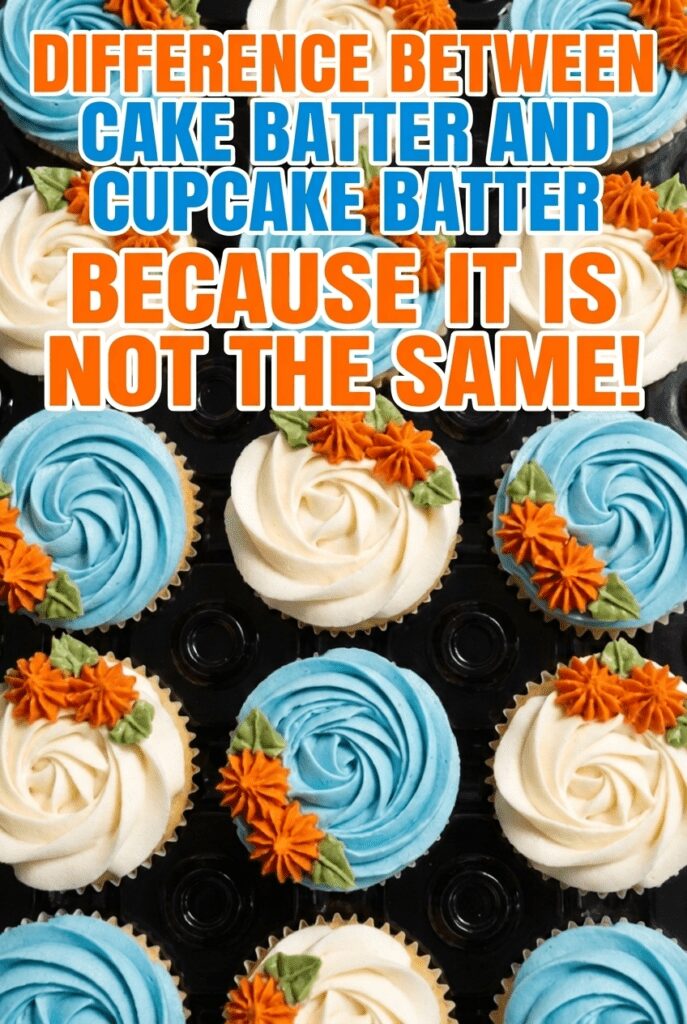
A bright overhead flat-lay of baking essentials on white marble: two mixing bowls (one with thick cupcake batter, one with thinner cake batter), measuring cups and spoons, whisk, digital kitchen scale, a cupcake tin with a few filled liners, and a round cake pan beside it. Soft natural window light, warm cozy kitchen vibe, pastel tones (light creams, soft browns). Add large modern text overlay at top: “Cupcake vs Cake Batter: Understand the Difference”. Clean editorial style, slight depth-of-field blur, 2:3 vertical ratio.

Posted In: Baking 101

You’ll Also Love

Cute Easter Desserts
Best Tools for Beginner Bakers
How to Fix Common Baking Mistakes
Next Post >

How to Measure Ingredients for Perfect Results

Primary Sidebar

Welcome to Berry Whisk – I’m Elizabeth, and this is where I share my sweetest creations: easy desserts, holiday treats, and delicious everyday bakes that anyone can whip up. I’m so glad you’re here! You can learn more about me here, or dive straight into the recipes and start baking.

Visit Us On Pinterest

Pinterest

Recent Posts

  • Cute Chocolate Covered Strawberries Ideas
  • Cutest Rainbow Cake Ideas
  • Mint Desserts That Taste Amazing
  • Green Desserts That Start With Cake Mix
  • Pistachio Desserts That Are Surprisingly Easy

Footer

hey there!

Welcome to Berry Whisk – I’m Elizabeth, and this is where I share my sweetest creations: easy desserts, holiday treats, and delicious everyday bakes that anyone can whip up. I’m so glad you’re here! You can learn more about me here, or dive straight into the recipes and start baking.

Browse By Dessert

  • Cookies & Bars
  • Cakes & Pies
  • No-Bake & Quick Desserts

Browse by Season

  • Seasonal
  • Christmas

Other Links

  • About Berry Whisk Recipes
  • Contact
  • Privacy Policy

Copyright © 2026 destination for vibrant seasonal desserts · Theme by 17th Avenue